Slow Food – Fast Checkout: How visioncheckout is playing into the sustainability trend.

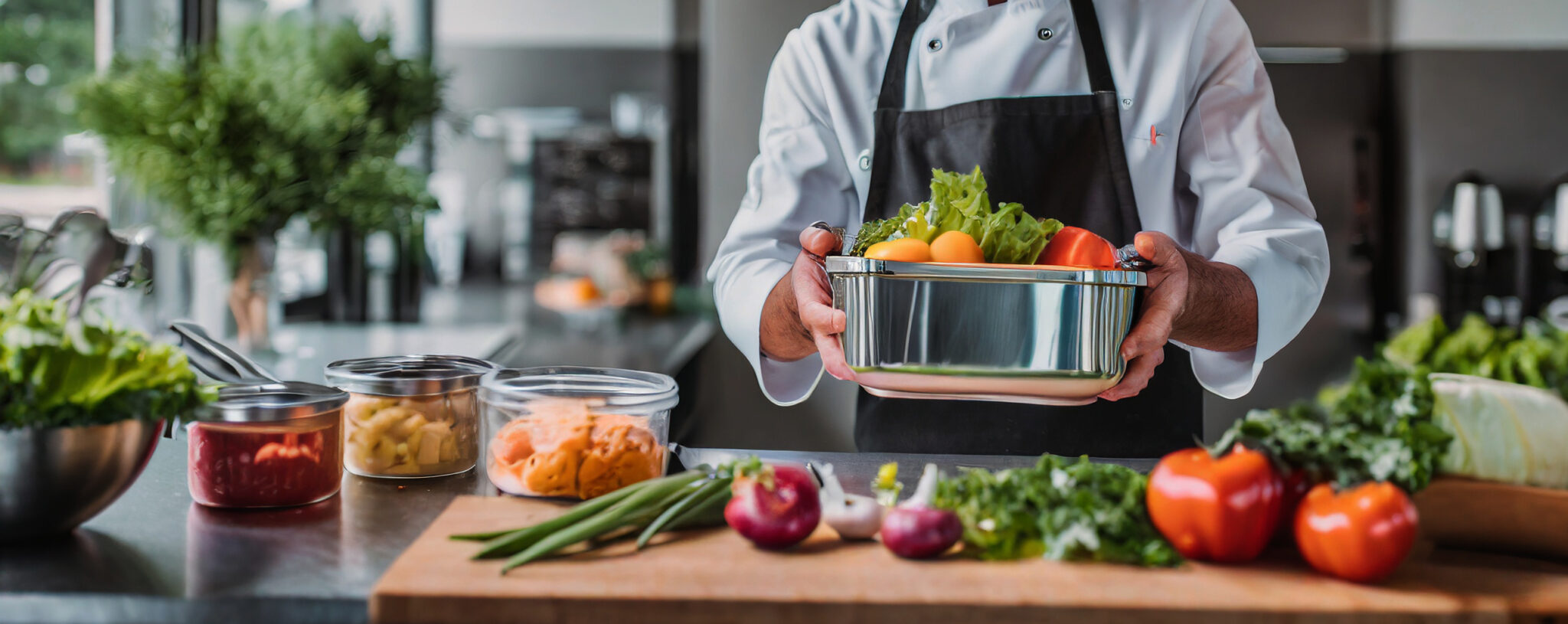
Slow Food has made its way from our own kitchens to the counters of many company canteens. As the "counterpart" to fast food, it stands for regional, sustainable, and healthy meals that are meant to be more than just a way to satisfy hunger. This requires a high level of flexibility and expertise from kitchen staff—an investment that needs to be balanced to ensure the profitability of the company restaurant. This is where the visioncheckout can provide the necessary relief and free up resources where they are needed most. But one thing at a time.
What is Slow Food?
Slow Food is the opposite of fast food. So far, so clear. But what exactly does that mean?
The Oxford English Dictionary defines Slow Food as "food that is produced or prepared in accordance with culinary traditions, often using locally sourced, high-quality ingredients, and is intended to be savored." This definition is particularly interesting because of its two-fold nature: it is not just about the preparation, but also about the consumption of the meals. Especially in a corporate environment, such as company restaurants, many find it difficult to maintain this "savoring" pace, both in the kitchen and in the dining area. However, Slow Food has become more than just that. Since 1986, the Slow Food Foundation has been raising awareness about the consequences of factory farming, overfishing, and exploitation, aiming to "create a food system based on fair relationships that promotes biodiversity, the climate, and health."
Of course, as a self-checkout provider, we cannot claim these goals as our own. However, especially in corporate catering, we can create a framework that makes Slow Food possible even in such a cost-efficient and fast-paced environment. The underlying challenges in implementing Slow Food in company restaurants are, in particular, the additional time required for preparation and service, the resulting additional costs, and, on the part of the guests, the limited time available for lunch breaks.
Problem 1: Time
As the name suggests, Slow Food costs one thing above all: time. And at every stage of the supply chain. By moving away from mass production, a high degree of individuality is introduced, which slows down processes in large-scale kitchens. Yet, the goal of offering sustainable and healthy dishes remains unchanged.
The question now is how to maintain this without forcing guests to endure long wait times. The solution seems simple, but due to the acute shortage of skilled workers, it is rarely feasible. Well-performing companies might be able to afford more staff, but unfortunately, they cannot find any. With the help of the visioncheckout , vital resources are not tied up at the register and can be redeployed where they are needed more urgently, for example, at the serving counter or in the kitchen.
Problem 2: Money
Putting regional and sustainable dishes on the table is already an additional cost factor that decision-makers must address on the path to Slow Food. Most are very reluctant to hear that this trend is also particularly labor-intensive. It is therefore practical to be able to manage staff scheduling flexibly, so that no additional employees need to be hired at all.
If the register does not need to be staffed, the personnel who would otherwise be stationed there can help prepare time-consuming dishes and maintain efficient workflows during peak hours.
Problem 3: Stress
As mentioned at the beginning of this article, Slow Food is not just about preparing food, but also about eating it. Especially in company restaurants, time for meals is often already quite limited. The last meeting ran over, emails are quickly checked on the smartphone, and the next appointment starts in just 20 minutes. And then, every register in the canteen is crowded.
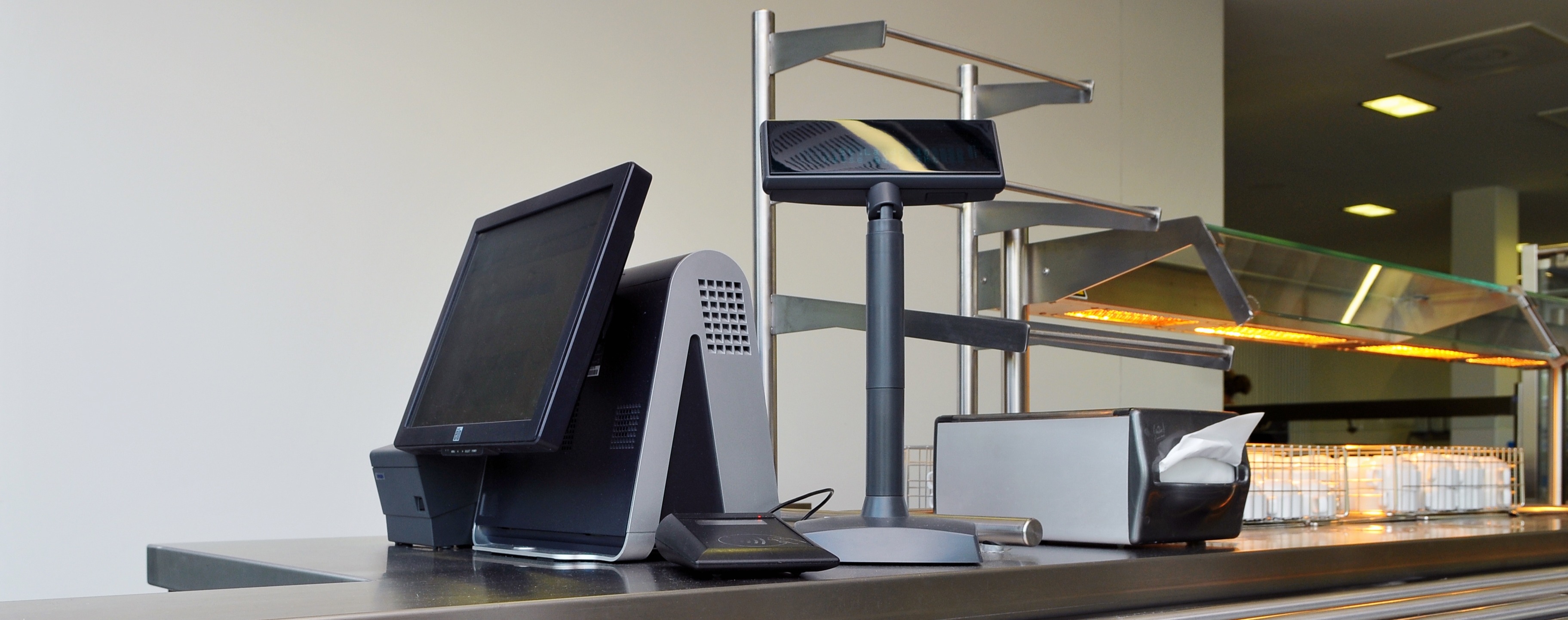
This is where the visioncheckout is a welcome support. Whether used as a fast lane or implemented throughout the entire area: the visioncheckout is a real relief for staff and guests, especially during peak hours.
Digitalization and sustainability
The two major trends of our time. No matter which industry you look at, these two buzzwords are everywhere, and the catering and restaurant sector is no exception. Since both goals often involve initial investments, and above all, conceptualization and project work, one might assume that companies have to choose: one or the other. However, the big question is whether these two trends might actually benefit from and support each other. For example, the two biggest hurdles to implementing sustainability in both campus and corporate catering are a lack of budget and staff shortages, according to a 2023 Nestlé study.
On the other hand, the great potential of digitalization lies in increasing employee efficiency and reducing the cost of complex work processes. With clever planning, both trends can be introduced in parallel and benefit from one another. In concrete terms, this means that the decisive factor for reducing CO2 emissions in the catering industry is the efficient reduction of food waste. To succeed, it is important not to rely solely on gut feeling, but to use data to determine projected sales. But where does this data come from? With the help of AI-based food recognition, you can precisely track how much of each item has been served. The next step is simply to analyze that data.
Katrin Keppler
Seit über 5 Jahren im Bereich Self-Checkouts und Gastronomie unterwegs.